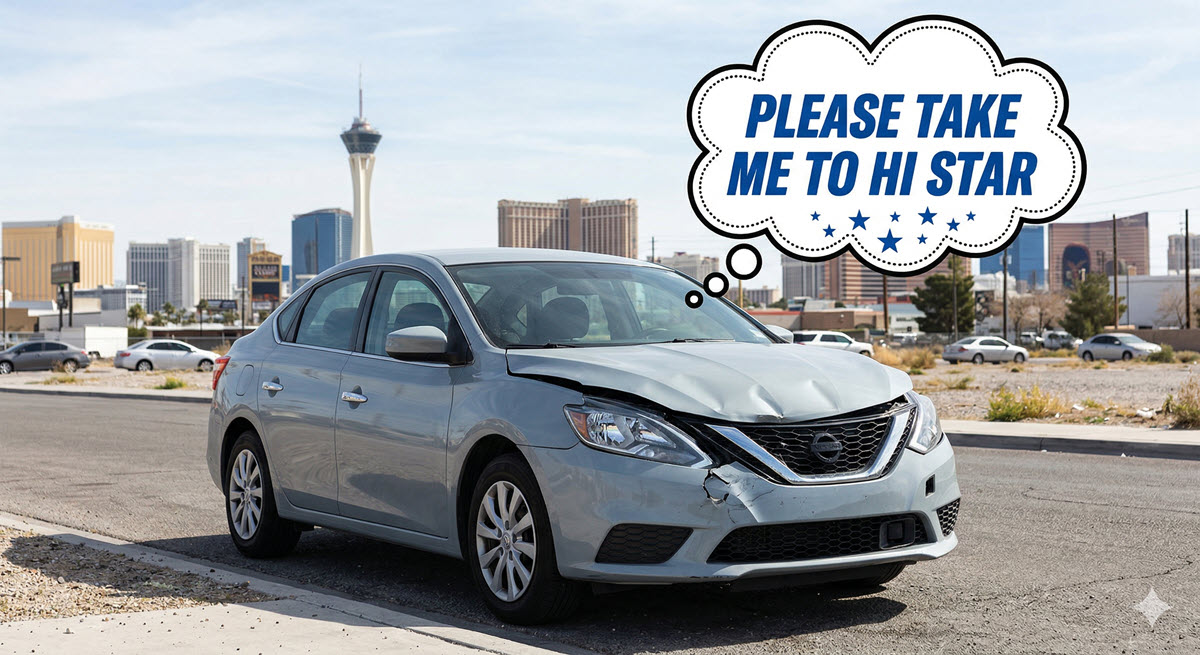
You’ve just been in an accident. Your nerves are shot, your car is damaged, and now your insurance company is on the phone telling you to take your vehicle to their preferred body shop. It feels like a directive. It isn’t.
You have the right to choose your own repair shop — and in Nevada, that right is protected by law. Before you hand your keys over to a shop you’ve never heard of, here’s what every Las Vegas driver needs to know.
The Short Answer: No, You Don’t Have to Go Where Your Insurance Sends You
Insurance companies maintain networks of “preferred” or “direct repair” body shops. These are shops that have agreed to work under the insurer’s pricing and processes. The arrangement is convenient for the insurer. It isn’t necessarily the best deal for you.
Nevada Law — Under NRS 690B.016, your insurance company is legally required to notify you of your right to choose any licensed body shop in the state. They cannot require you to use a specific shop.
The practice of pressuring customers toward a specific shop is called steering, and it is prohibited under Nevada law. If a shop or claims adjuster implies you must use their preferred facility — or that your claim will be delayed or diminished if you don’t — that is a red flag worth documenting.
Why Insurance Companies Push Their Preferred Shops
Direct Repair Program (DRP) shops have agreed to prioritize the insurer’s cost controls. That can mean faster turnaround, streamlined claims processing, and lower parts costs — which benefits the insurer’s bottom line. What it doesn’t guarantee is the highest quality repair for your specific vehicle.
Here’s what you should know about the preferred shop arrangement:
- Cost control over quality: The shop’s first obligation is to the insurer’s pricing structure, not your vehicle’s pre-accident condition.
- Parts substitution: Insurers sometimes push cheaper aftermarket parts over OEM (original equipment manufacturer) parts. In Nevada, they must get your written consent before doing so on vehicles under 5 years old.
- Volume over attention: DRP shops process high volume. Your car is one of many. Independent shops — especially family-owned ones — have more at stake in every individual repair.
What You’re Actually Entitled To
Nevada law is specific about what your insurance company owes you after an accident. These aren’t negotiable:
- Your vehicle must be restored to its pre-accident condition.
- You are not required to obtain more than one estimate.
- You cannot be forced to use the insurer’s drive-in claim service.
- Aftermarket, used, or rebuilt parts cannot be installed without your authorization.
- A shop cannot legally waive or absorb your deductible — if someone offers this, walk away.
The insurer’s job is to process your claim. Your job is to make sure your car is repaired properly. Choosing your own qualified shop is the most direct way to protect that outcome.
What to Look for When Choosing a Body Shop
Not all shops are equal. Here’s what separates a shop that protects you from one that just moves cars through a bay:
- I-CAR Gold Class Certification: I-CAR Gold Class is the collision repair industry’s top certification. It requires ongoing training, updated equipment, and adherence to manufacturer repair procedures.
- ASE-Certified Technicians: ASE-certified mechanics matter especially if your vehicle sustained mechanical damage in the accident. Most body shops send mechanical work out. A full-service shop handles it in-house — no finger-pointing between vendors, no gaps in the repair.
- Documented Repair Process: A reputable shop documents every stage of your repair with photos and written records. If your shop isn’t doing this, you have no evidence trail if a dispute arises with the insurer.
- Written Warranty: Your repair should be backed by a written warranty. Understand exactly what’s covered and for how long.
- Insurance and Legal Coordination: A shop that works with your attorney — not just your adjuster — is a shop that understands the full picture of what an accident costs you.
The Hi Star One-Stop Advantage Most Drivers Don’t Think About
Here’s something most people don’t consider until it’s too late: accidents don’t just damage panels and paint. They damage frames, suspension components, alignments, and mechanical systems. Body-only shops send that work elsewhere. That creates two separate shops, two separate warranties, two separate points of accountability — and zero ownership when something goes wrong.
Hi Star Auto Center is a shop that handles both auto body and mechanical repair under one roof. Hi Star eliminates that problem entirely. One point of contact. One warranty. One shop that owns the outcome from bumper to bumper.
The Bottom Line for Las Vegas Drivers
Your insurance company is not your advocate in the repair process. They are managing a claim. You are dealing with the safety and value of your vehicle — and potentially recovering from an accident that affected your daily life, your livelihood, or your physical health.
Choose a shop you trust. Choose a shop that is certified, transparent, and willing to advocate for you — not for the insurer’s preferred pricing. And know that in Nevada, your right to make that choice is backed by state law.
Get a Free Estimate from HiStar Auto Center
Your car. Your choice. Let us handle the rest — insurance coordination, parts, repairs, and everything in between. HiStar Auto Center is Las Vegas’s full-service auto body and mechanical repair center, and we work with every major insurance company so you don’t have to fight that battle alone.
Call us or stop by for a free, no-obligation estimate.
HiStar Auto Center | Auto Body & Paint · Auto Mechanic | Las Vegas, NV